Zinnia - State Fair Mix
Zinnia - State Fair Mix
Planting Instructions:
Days to Maturity: 60 - 80 days. Hardiness zones 3 - 10
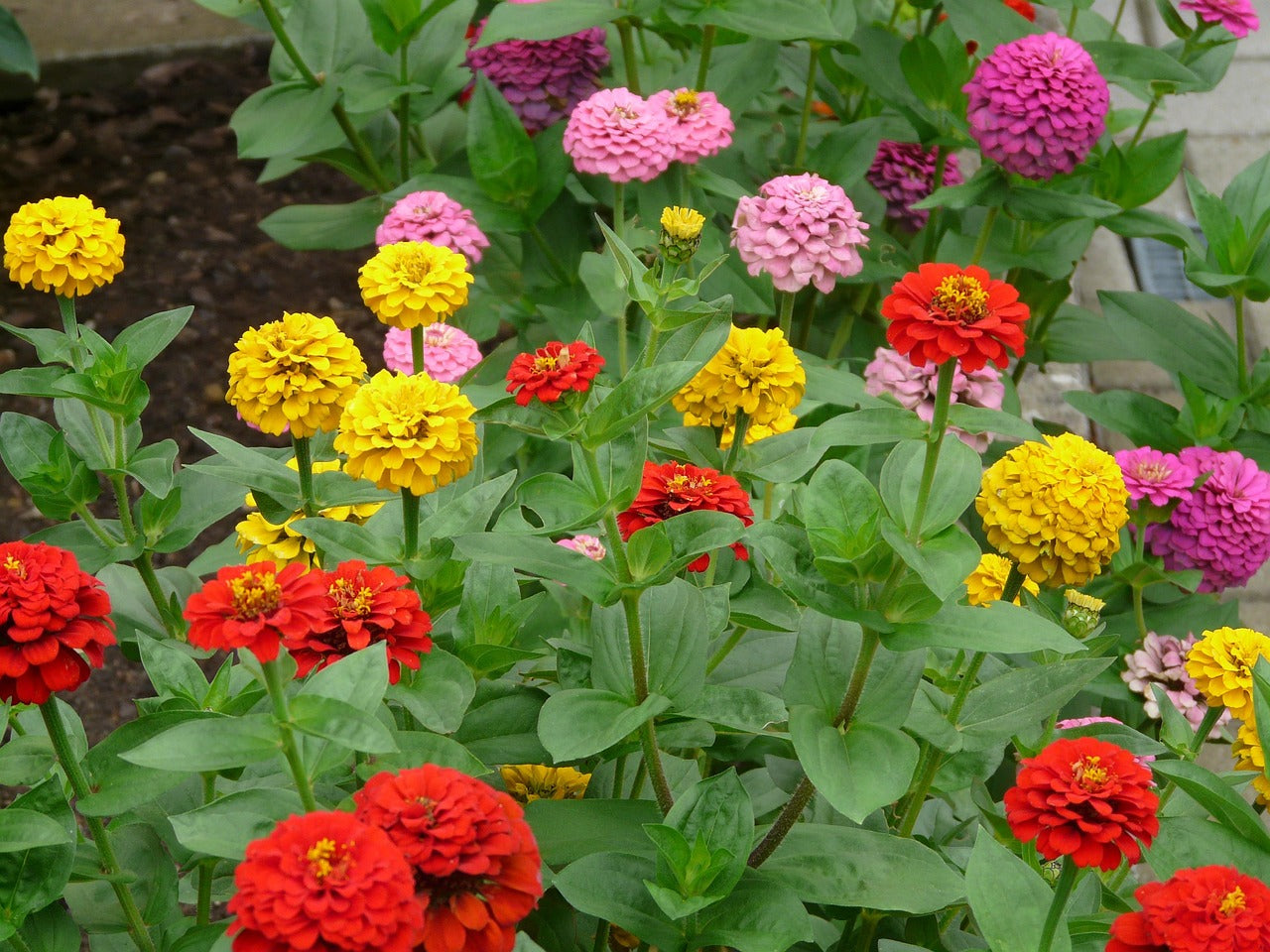
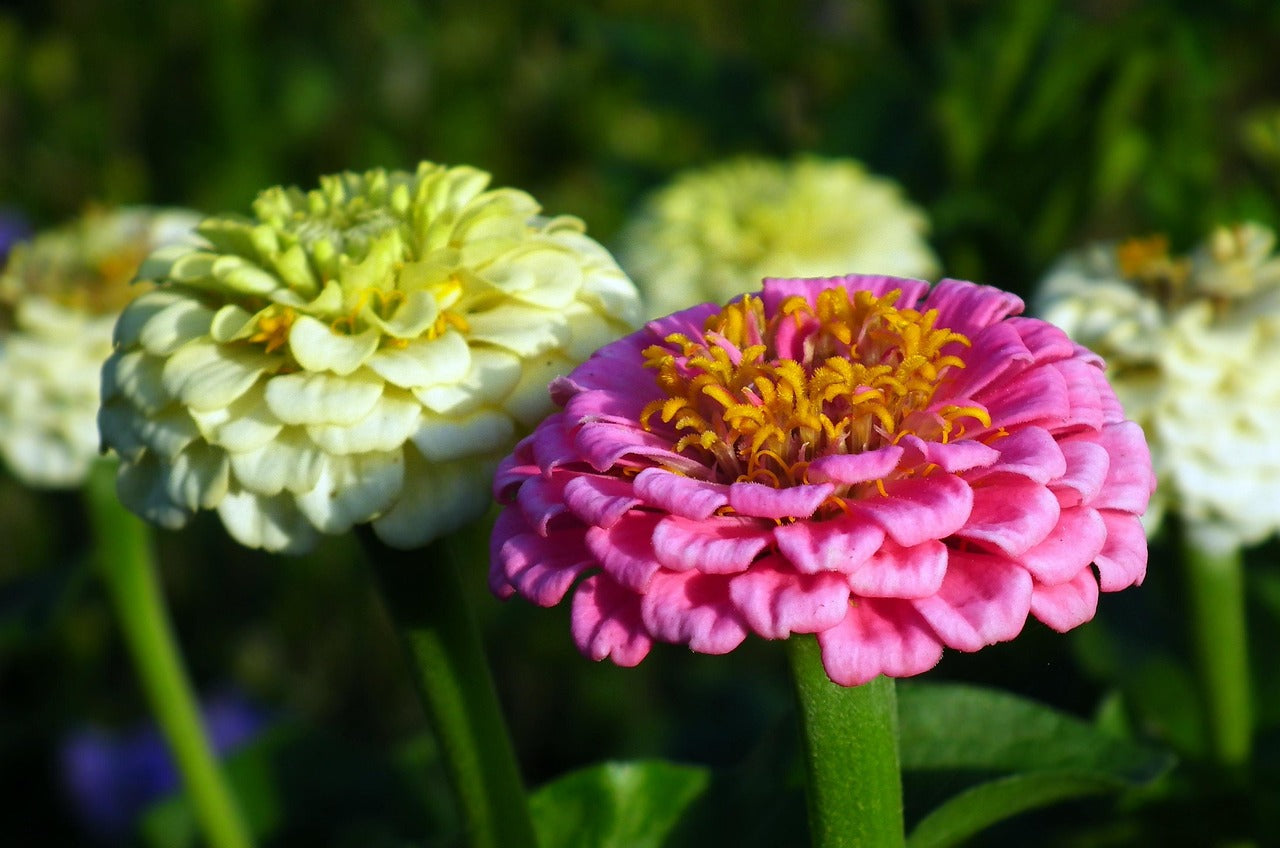
These beautiful zinnias can grow up to 36" tall and are upright with a 12 - 18" spread. The blooms are dahlia like and can be 5-6" across. They like moist, rich, well-drained soil. Plant seeds 1/4 - 1/2" deep and approximately 18" apart.
Care:
Zinnias do best if planted directly into the ground. In our experience they don't like their roots to be disturbed. They also propagate themselves well if left to their own devices. They do well in full sun unless you're in a very hot climate where they would prefer afternoon shade in the summer. These zinnias will continue to bloom until a killing frost. Since these zinnias are very tall keep that in mind when planting in a bed, you may prefer to put them towards the back. State Fair Zinnias have a high resistance to disease, powdery mildew, and Alternaria.
History:
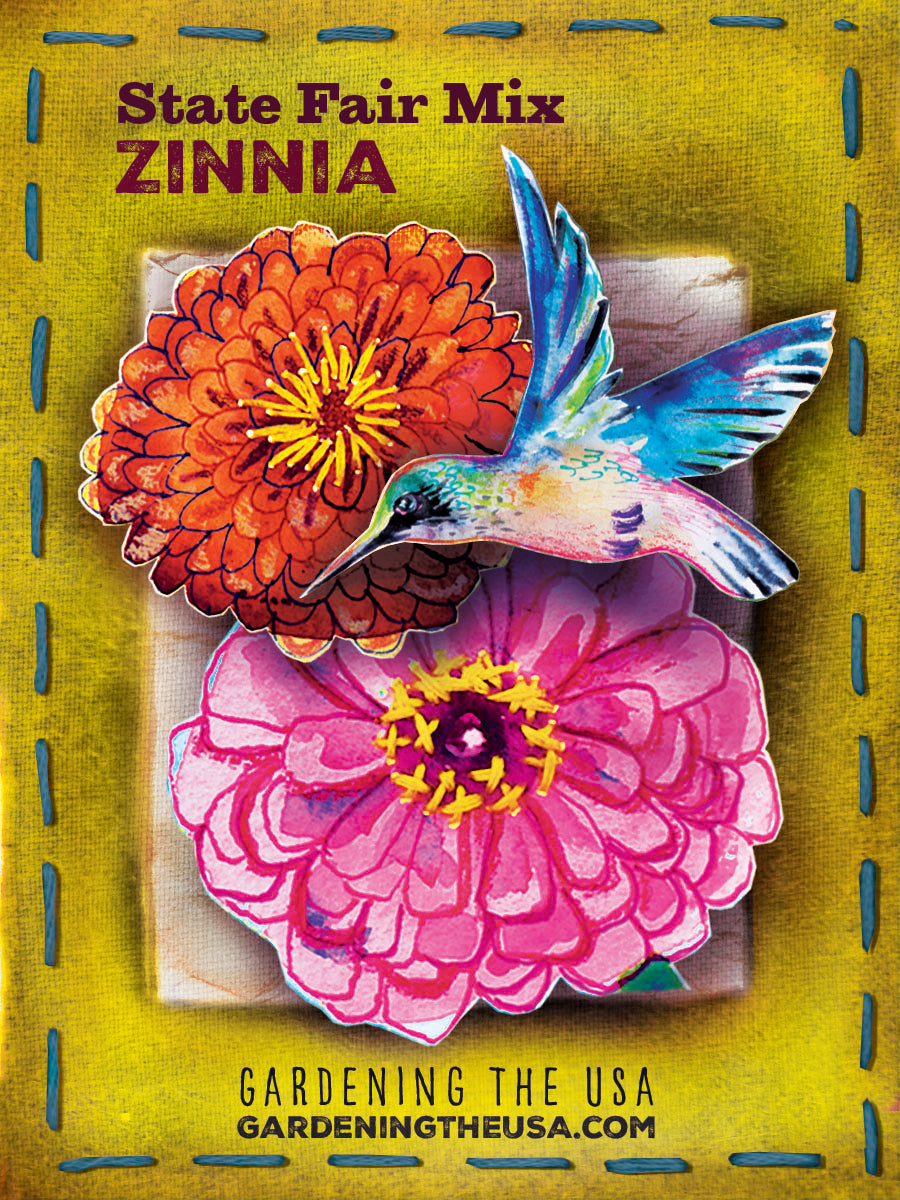
Hummingbirds and zinnias interact in a mutualistic relationship, where the hummingbirds obtain vital nectar for energy, and in return, they act as primary pollinators for the plant, ensuring its reproduction and the continuation of both species.
Hummingbirds have an extremely high metabolism and need to feed frequently throughout the day to maintain their energy levels. Zinnias provide an abundant, consistent source of nectar from early summer until the first frost, making them a crucial food stop.
- Energy Provision: Hummingbirds trade their time and energy visiting flowers for essential nourishment, which is the nectar.
- Color Attraction: Zinnias' vibrant colors, particularly shades of red, pink, and orange, act as strong visual cues that attract hummingbirds to the flowers.
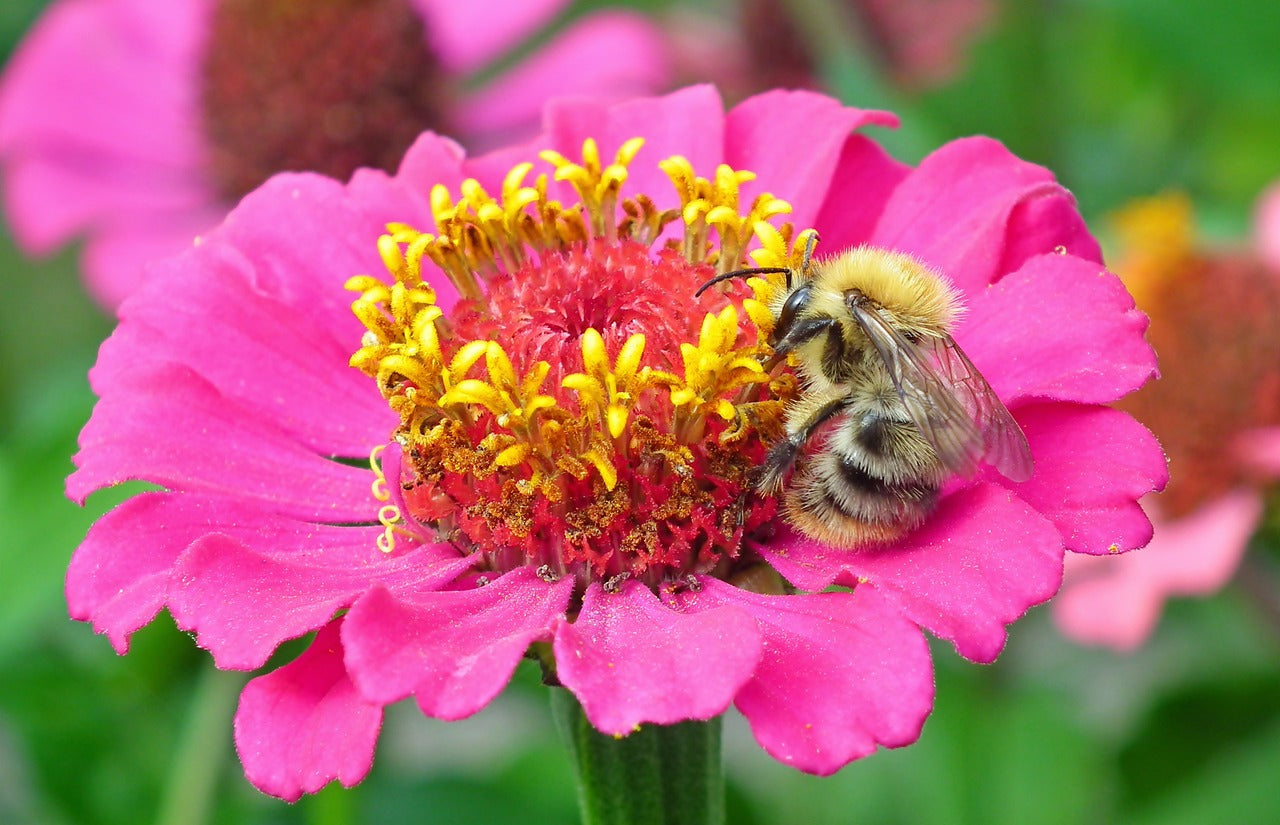
Zinnias rely on pollinators like hummingbirds to facilitate their reproduction. The structure of the flower allows the bird's head to brush against the pollen-rich florets while feeding.
- Pollen Transfer: As a hummingbird sips nectar, pollen sticks to its head and beak.
- Reproduction: The bird then carries this pollen to the next zinnia it visits, fertilizing the plant and allowing it to produce seeds and continue its life cycle.
Why It Matters:
This interaction is a classic example of coevolution, where both species have evolved traits that benefit the other, supporting broader biodiversity within the ecosystem. By supporting a healthy pollinator population, this dynamic contributes to the overall resilience of the local plant and animal community.
Share